
WhatsApp Automation for Business Growth
See how WhatsApp automation supports business growth through faster lead response, reminders, qualification flows, and customer updates without losing a human feel.
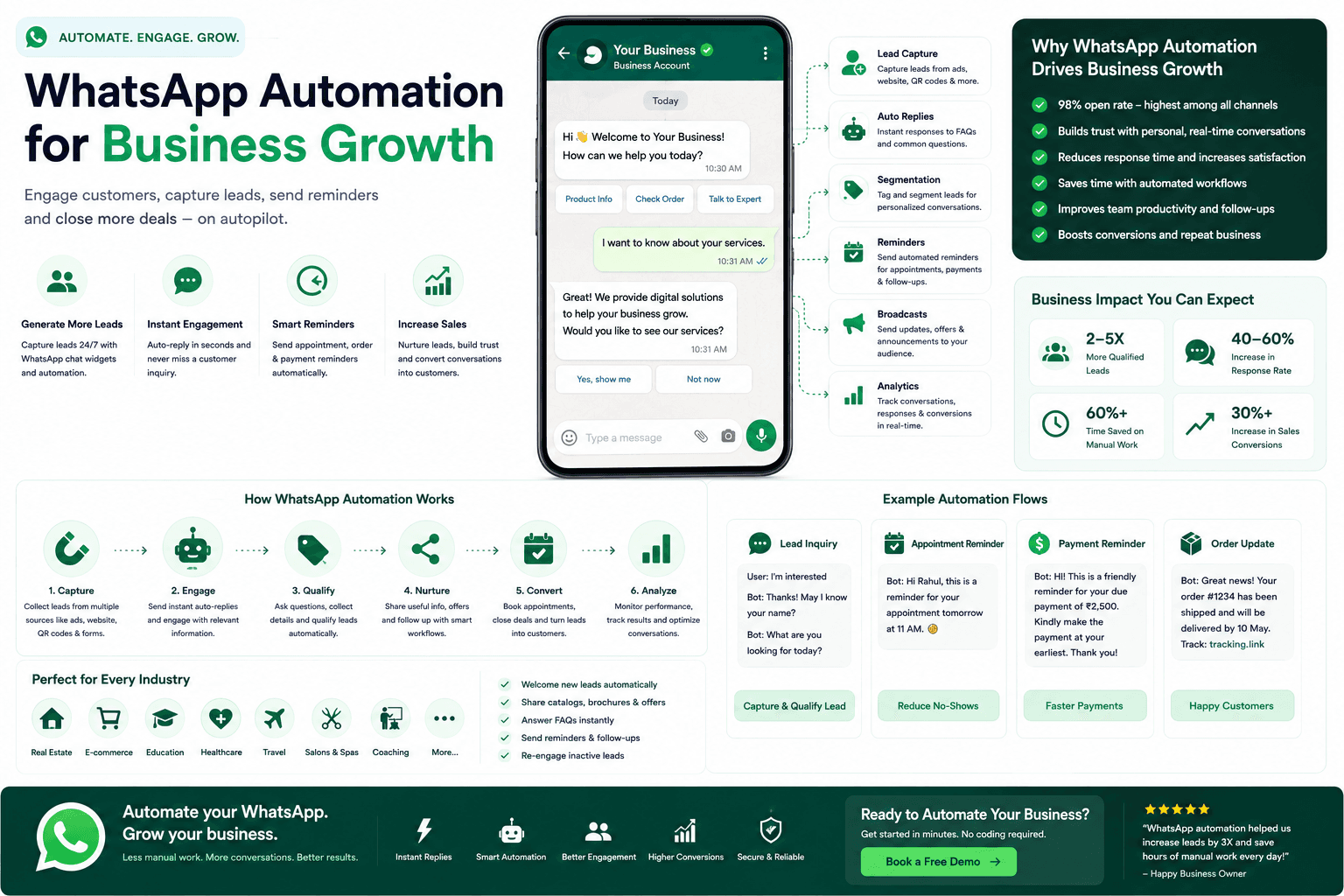
Overview
WhatsApp automation works well because customers already prefer the channel. When done thoughtfully, it speeds up replies and organises conversations without making the business sound cold or robotic.
Business automation connects routine tasks across forms, CRMs, email, WhatsApp, databases, dashboards, and internal tools. The goal is to reduce manual effort while keeping quality and accountability high.
Why It Matters
For many businesses, the problem is not a lack of leads but delayed response, missed follow-ups, and no structured way to move chats toward bookings or payments. WhatsApp automation directly addresses those gaps.
Automate the predictable layers first: greeting, qualification, confirmation, reminders, and status updates. Keep a clean handoff to human staff for exceptions and relationship-driven conversations.
Examples In Practice
A salon can automate appointment confirmations, service selection, and reminder messages so staff spend less time repeating the same booking questions all day.
A B2B company can use WhatsApp flows to confirm demo attendance, share proposal links, and nudge dormant leads after a quote without relying on manual message tracking.
What A Good Decision Looks Like
The right answer is rarely the most complicated version of whatsapp automation for business growth. A sensible decision starts with the problem people are experiencing today, the outcome the business needs, and the constraints around budget, data, team capacity, and timing. This makes it easier to separate a useful investment from a feature that only sounds impressive in a planning meeting.
Before committing, write down what success should look like in day-to-day work. It could be quicker lead follow-up, fewer support handoffs, clearer reporting, a smoother buying journey, or less time spent correcting errors. Give that outcome an owner and a simple baseline so the team can compare the result after launch instead of relying on instinct alone.
It also helps to speak with the people who will use the system every day. They usually know which exceptions matter, where information goes missing, and which shortcuts keep work moving. Bringing that context into discovery produces a more practical solution and makes adoption much easier once the work goes live.
How To Approach It
A good implementation begins with a short discovery phase. Map the current process from the first trigger to the final outcome, including the people involved, existing tools, data quality, approval points, and the moments where work slows down. This gives the project a shared source of truth before design or development begins.
From there, shape the work into a realistic roadmap: define the smallest valuable version, design the user flow, build and test it with real scenarios, launch carefully, and improve from evidence. A phased approach protects the budget, reveals issues earlier, and avoids spending months on features that do not change the business outcome.
Keep a human review path for important decisions, especially where money, customer commitments, or sensitive information is involved. Clear ownership, useful reporting, and regular feedback after launch are what turn a one-time project into a system the team can depend on.
- Start with the business outcome before choosing tools.
- Map the current workflow, users, data, risks, and approval points.
- Build a focused version first, then improve from real usage.
- Measure speed, conversion, reliability, support load, and operational savings.
- Keep the system maintainable with clear architecture and documentation.
Where STEXRA Can Help
STEXRA tends to connect WhatsApp automation with forms, CRMs, and dashboards so the chat channel becomes part of the operating system, not an isolated inbox.
STEXRA can help with WhatsApp Automation, Business Automation, Automation Agency, and related work such as AI workflow automation, website design, web application development, custom software development, API development, and business automation.